

An observation from the headline stage last week. A conversation led by Lee Petts with Suze College and Tim Parker talked alot about holistic approaches to marketing. Somewhere in the middle of the discussion there emerged a theme of test and learn. We all know the drill, set and adjust. Run multiples, observe the winners and multiply them. There was something else which I think was interesting. In many cases, for these tests or approaches, the outcome was not known. There was a sense that the destination was unknown and the journey would guide the marketing. This means it is ok to not always know, in a testing culture, what every expected outcome can be.
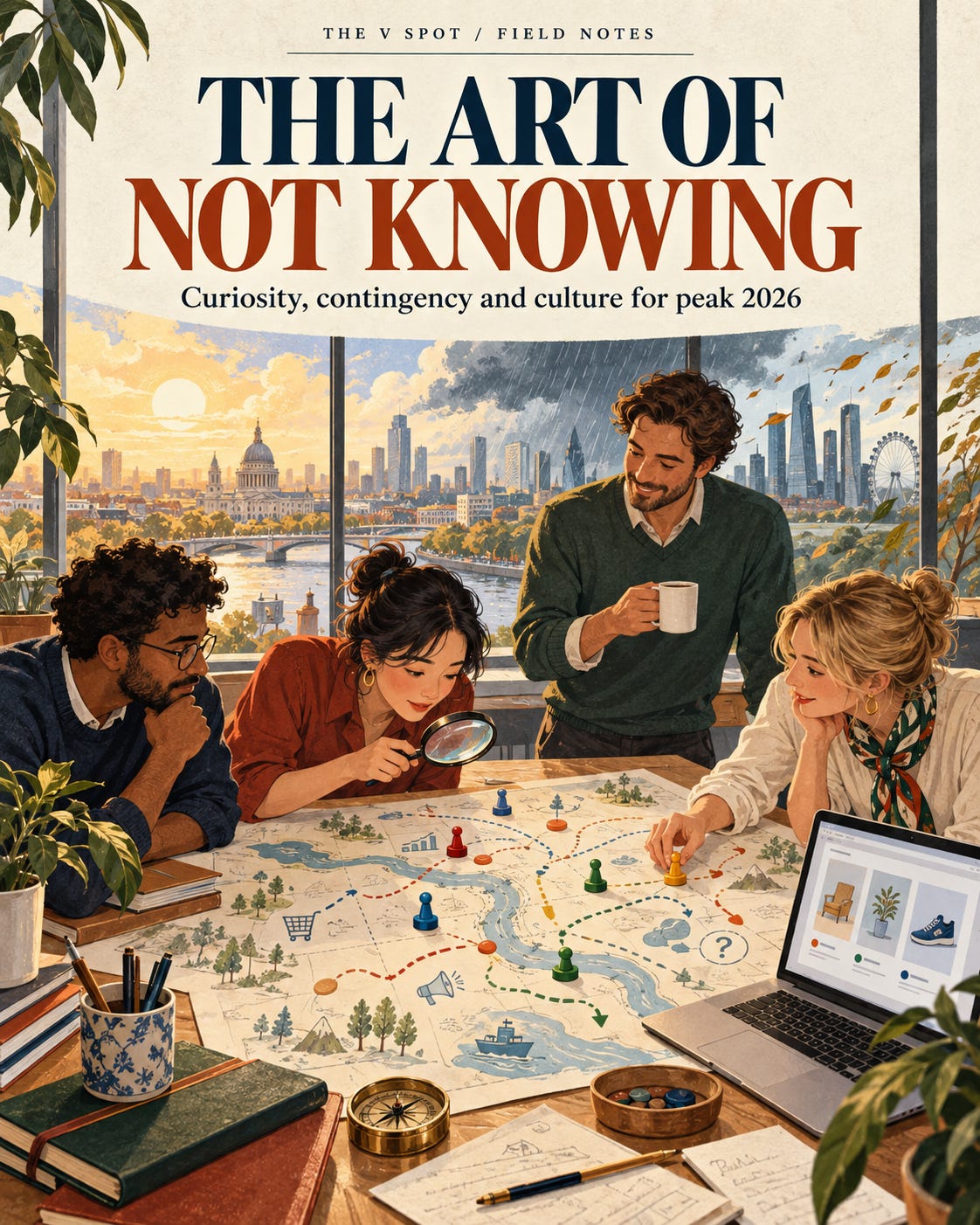
This means you have got to be curious in the first instance and the skill then is in reading what happens. Removing the elements not working, amplifying those moments that work. It also requires contingency planning. More than any other years I heard the “Plan B” set up. What happens when our desired plan is failing - how do we change approach. It makes sense. As we get more channels, we need to accept some of our plans, or most may fail. Winning is in moments and not necessarily in full campaigns. When budgets are tight this type of approach is absolutely critical.
Customers are now more fragmented in their approach to channels and buying than ever before. It is kind of absurd to think we can act with absolute confidence in all our channels. Change in weather, celebrity endorsement, an overnight tariff fever dream. The macro environement is so far outside of our control, not only that but it is subject to change, almost by the hour. So teams that are successful are those set up for change as the constant. This is where AI is definitely helping. AI the tool, not AI the strategy. This was another emerging aspect of the conversation.
AI the tool can multiple our presence, can make subtle edits to ad copy, colour and so on with great ease. Many agencies are focusing on this type of tool build too. Culturally, we have moved Boxing Day sales and we are absorbing them into peak selling season (which has started) and this means we can spread our risk and our effort into a longer selling cycle. Customers (I am one) are spreading payments and purchasing over a more protracted period. So you have time to adjust, to adapt and to observe what is going on around you.
It was clear from the leaders in this discussion that empathy is key to buy in. It is a damn tough job these days and it may involve long and unfriendly hours. This has to be acknowledged and returned to people. The carrot and not the stick. Leaders need to be demanding due to the enormous pressures right now but knowing we are all in it together and there may be no right answer at the beginning are traits of leaders who will do better, make no mistake and those who will guide teams through tough days and will share in the joy of the good ones. Culture over strategy for the peak win 2026.