Free For Chubbies
The Struggle Bus: Nick Kaplan AKA The Professional Dad of E-Commerce
Free For Chubbies
The Struggle Bus: Nick Kaplan AKA The Professional Dad of E-Commerce
Guest: Nick Kaplan, Director, RMW Commerce
Host: Vinny O’Brien
Episode Theme: Why listening and thinking are still the only competitive advantages that matter, and what a coat department at Saks can teach you about everything
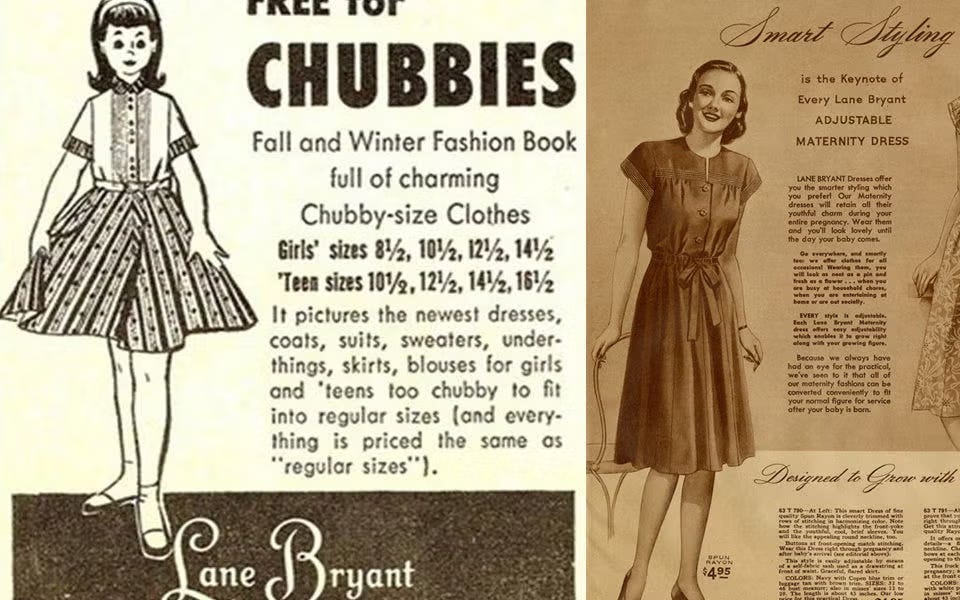
Before We Meet Nick: The Woman Who Started It All
To understand Nick Kaplan, you need to go back further than Nick. Back past Saks Fifth Avenue. Past New York. All the way to 1895, when a 16-year-old Lithuanian orphan named Lena Himmelstein arrived in New York City with nothing and started sewing lingerie in a sweatshop for a dollar a week.
Lena’s parents had been murdered in an anti-Jewish pogrom. She was raised by her grandparents, emigrated alone, married a jeweler named David Bryant who died shortly after their son Raphael was born, and found herself widowed, broke, and responsible for a child. So she did what generations of women before and after her would do, she made things with her hands and sold them.
By 1904, she’d saved enough to rent a tiny shopfront on Fifth Avenue for $12.50 a month with living quarters in the back. When she went to the bank to open an account, an officer misspelled her first name. Lena became Lane. And Lane Bryant was born.
Her breakthrough was deceptively simple: a pregnant customer asked for something presentable to wear in public. At the turn of the century, expectant women were expected to disappear from society. Lena designed a dress with an elasticized waistband and an accordion-pleated skirt, we are told, the first commercially sold maternity dress. No New York newspaper would advertise it. Pregnancy was unspeakable in print. When the New York Herald finally accepted an ad in 1911, the entire stock sold out the next day.
She went on to pioneer plus-size clothing, profit-sharing for employees, health insurance, and a policy where any Lane Bryant customer whose wardrobe was destroyed in a disaster got a free replacement through the Red Cross. By her death in 1951, Lane Bryant was the sixth-largest mail-order business in America.
Nick tells the story slightly differently in the episode. He says his great-grandmother “had a pair of diamond earrings from her marriage and pawned them for a sewing machine and built Lane Bryant.” The details vary as family stories do, and should, when they’re passed down through generations but the essence is the same: a woman with nothing who saw a gap, solved a problem, and built an empire. That DNA runs through what Nick does today, whether he’s conscious of it or not.
And it wasn’t just one grandmother. His other grandmother was a teacher with four kids in New York whose husband dropped dead at 48, and she took over his dress business with her 21-year-old son fresh out of business school and built it into something substantial.
Two generations of women building from wreckage.
That’s the soil Nick Kaplan grew up in.
Who Is Nick Kaplan?
Nick is a merchandiser. He is also like a combination of Fozzy the bear and Oscar the Grouch, though in what order, I am not sure. Not a “former merchandiser who pivoted to consulting” a merchandiser at his core, who happens to now consult. He’s a Director at RMW Commerce, where he works predominantly with founder-led businesses that have hit the inflection point where founding energy alone isn’t enough anymore. He’s the person who walks in and says: what problem are we actually solving?
He’s also, by his own admission, a head person. Not a heart person, though the heart catches up eventually. He overthinks. He talks a lot not to be heard, but because he’s pathologically passionate about teaching. His daughters have been drilled on the two most important things in life: listening and thinking. If you put them in separate rooms and asked, they’d both give you the same answer instantly.
He’s polarizing. He’s brash. He smiles constantly. He picked “Life is a Highway” as his career song and then immediately said he doesn’t even like the song. He’s the kind of person who keeps a mental inventory of expressions and frameworks that people around him start quoting back there’s apparently a document called “The Kaplan Bible” that someone at Pattern compiled from his sayings. His kids make fun of him for it. He is also part Irish, in that he is self deprecating, at times apologetic for having opened his mouth, it is, in part, why we connected.
Emmet Shine, co-founder of Pattern, someone we both know, calls Nick a “professional dad.” It’s meant affectionately, and it’s accurate. Nick mentors people the way a father does: not just teaching, but being the guardrail. The trusted voice that can tell you the thing you already know but need to hear from someone you trust.
Being Nick Kaplan.
Nick’s worldview was forged on the sales floor at Saks Fifth Avenue, and it has never really left that floor. Everything he does, the consulting, the mentoring, the strategy work, is still rooted in one foundational principle:
We solve problems. That’s it.
The story that captures this best is the raincoat story. When it rained, Saks sold 18–20 raincoats a day. When it didn’t rain, they sold 2. The lesson isn’t about weather. It’s that commerce has always been about recognising a need in the moment and meeting it. Not overthinking it. Seeing the rain, bringing out the coats.
He extends this directly to e-commerce’s existential crisis about “recreating the store experience”:
“We’re putting way too much then and now emphasis on, we have to be able to recreate the store experience... I don’t think we’re asking the right question for saying, how can I recreate this? It’s more, how can I solve a problem? And what’s the experience that I need to be able to do that?”
That reframe alone is worth the price of admission. Twenty years of e-commerce hand-wringing about “digital experiences” and “omnichannel journeys,” and the answer might just be: what does this person need right now, and am I giving it to them?
His thinking also runs on a single, hard-earned word that distills everything he learned in therapy:
“If I had to distill years and years and years and years of therapy down to one word, pause. And think and respond. Versus we as an industry, we as people, we react to everything because there is no opportunity to respond.”
That’s not just personal advice. It’s a diagnosis of the entire e-commerce industry. Technology has created what he calls an “arms race,” and in that race, the instinct to react has completely overwhelmed the discipline to respond.
Saks Education.
What a Coat Department Teaches You
Nick’s first job was department manager of women’s coats at Saks. It remains his favourite job. He worked seven days a week for an entire year, not on commission, just because he wanted to be the best. He was 22.
The pivotal moment: a crazy winter with 17 snowstorms. Standard practice was to markdown coats by Columbus Day, then send unsold inventory to “sell-off” (essentially liquidation). Nick looked at this and thought — why are we marking coats down in October? His mentor Bill Lynch explained the bicycle chain theory: you’re only as strong as your weakest link. When Bloomingdale’s or Nordstrom breaks price, everyone has to follow.
But Nick held his coats. Instead of sending them to sell-off, he called stores across the network and had them transfer their unwanted coat inventory to him. The buyers hated him. He fought for floor space. And he turned a $2 million sales plan into $3 million in actual sales.
“Still one of my proudest moments. But yeah, I just wanted to be the best. And I wanted also, for political purposes, to be able to trade on that reputation going forward.”
The lesson isn’t “be contrarian.” It’s that the best merchants don’t follow the system blindly, they understand why the system exists, and then they know when the conditions have changed enough to break it.
The Professional Dad Framework
Nick has a specific, useful way of thinking about mentorship. A mentor is two things: a teacher and a guardrail.
The teacher part is obvious passing on knowledge. But the guardrail is more important. The guardrail is the person who has enough trust and credibility with you that when they say “you’re wrong,” you can actually hear it. Not everyone can deliver that message. The mentor is the person who can.
He tells a story about Bill Lynch getting furious with him early in his career. Nick was young, brash, not short on confidence. And Bill said something Nick had never heard before:
“Perception is reality.”
Simple words. But they landed because they came from someone Nick trusted. That’s the guardrail function, it’s not about having the right advice. It’s about being the right person to deliver it.
Nick also has an honest assessment of his own mentorship timeline that’s worth sitting with:
“I’ve had a couple, and at all the wrong times. Really early in my career and really late in my career. I think when I most needed one, I didn’t have one.”
There’s a pragmatic optimism in how he frames this though. The gap in the middle, the time without a mentor, is arguably what forced him to develop his own judgment. The wings needed to spread because there was no guardrail to lean on.
Industry Diagnosis
Nick’s view of e-commerce’s current state is both sympathetic and exasperated. He keeps coming back to one idea: we overthink everything.
The consolidation of e-commerce technology, where your email service provider is now also your CDP, SMS platform, personalisation engine, and probably your horoscope, has created a landscape where solving the customer’s problem gets lost in solving the tech stack’s problem.
“It’s not always the best technology that wins.”
And his New York umbrella sellers analogy is perfect: when it’s dry, they’re invisible. When it rains, they appear out of nowhere with exactly what you need. No customer journey map required. No attribution model. Just: it’s raining, here’s an umbrella, that’ll be $10.
The implicit challenge to the industry: can you be that responsive, that instinctive, at digital scale? And if you can’t, are you sure you’re solving a problem, or are you just building more technology?
The Career Song
When asked what song his career would be, Nick went with “Life is a Highway” by Tom Cochrane (yes, the Rascal Flatts covered it for Cars, but let’s give credit to the original Canadian). His reasoning:
“You’re just moving. Like it doesn’t... if you get off... one of my expressions is stagnation equals death. So Life is a Highway, you’re on it, enjoy the journey, do the best you can, don’t stop.”
He then immediately admitted he doesn’t even like the song. Which is the most Nick Kaplan thing possible, picking something for its meaning, not its aesthetic, and being completely transparent about the gap between the two.
Quotable Takeaways for Your Team
Here are the lines from this episode worth pinning, printing, or dropping into your next strategy deck:
On the purpose of commerce: “People need things and we help them find them and buy them.”
On the wrong question: “I don’t think we’re asking the right question for saying, how can I recreate this? It’s more, how can I solve a problem?”
On leadership and therapy: “If I had to distill years and years and years and years of therapy down to one word — pause.”
On reaction vs. response: “We as an industry, we as people, we react to everything because there is no opportunity to respond.”
On momentum: “Stagnation equals death.”
On mentorship: “Your mentor is that person that can be like, hey, let’s talk about this. What are you thinking? And you can hear yourself talking.”
On perception: “Perception is reality.” (Via Bill Lynch, but adopted as gospel.)
On technology: “It’s not always the best technology that wins.”
On parenting and life: “What are the two most important things in life? Listening and thinking.”
The Bottom Line
Nick Kaplan is retail’s institutional memory walking around in a human body that runs on caffeine, snacks, and an almost evangelical belief in teaching. He carries the DNA of women who built empires from sewing machines and diamond earrings — Lena Bryant, who turned a bank clerk’s typo into America’s largest plus-size retailer, and a grandmother who took over a dress business at 48 when her husband dropped dead.
That lineage shows up in everything he does: the bias toward action over analysis, the insistence on solving real problems instead of theoretical ones, the willingness to hold inventory when everyone else is liquidating because he can see what they can’t.
But what makes Nick different from the usual “grizzled retail veteran shares war stories” archetype is the vulnerability. He’ll tell you he overthinks. He’ll tell you he didn’t have a mentor when he needed one most. He’ll tell you he’s better at giving advice than taking it. And he’ll say all of this while smiling, because the professional dad never stops being the professional dad.
In a week where your inbox is full of AI roadmaps and agentic commerce whitepapers, Nick Kaplan is here to remind you that the fundamentals haven’t changed: listen, think, pause, respond. Sell coats when it snows. Sell umbrellas when it rains. And never, ever confuse reacting with responding.
Nick can be found on LinkedIn, and through RMW Commerce. Catch Kaplan’s Corner for his regular takes on the state of retail and e-commerce. And if you’re a founder who’s hit that inflection point where momentum alone isn’t enough, he’s the professional dad you didn’t know you needed.
The Struggle Bus is a V Spot show, hosted by Vinnie O’Brien. The Brad Pitt / snacking comparison remains unverified but spiritually accurate.
Guest: Nick Kaplan, Director, RMW Commerce
Host: Vinny O’Brien
Episode Theme: Why listening and thinking are still the only competitive advantages that matter, and what a coat department at Saks can teach you about everything
Sponsor Thank you
Proudly Sponsored.
I have been lucky enough to have had partners who give me the licence to roam without asking for much in return. During these series, I want to mention them as I review the episodes.
Omnisend - an ever present for over 12 months now. A team who seemingly enjoy Irish Poitin and I think it clouds their judgement too :)
Trustap - a payment provider specialising in marketplaces and ecommerce in General. From the People’s Republic of Cork - this tells you alot about them and their place on this planet. But specialising and payments go well together like brown shoes with a blue suit. Call them and tell them I sent you.
Parcel Planet - A partner who understands last mile is about the inches and about the details. They are a 3PL to the rising stars in ecommerce, and many household names too - knowing that their reach is your brand. Never just a parcel carrier and never just a silent partner. They live by a very simple principle set down by a very pragmatic CEO, who gets his street cred from the same place as Homer J Simpson. Watch this space.


Although I had the opportunity to work with Nick for only a short time, it remains a truly valuable experience for me. He was incredibly approachable, a strong and supportive leader who was always there when you needed guidance. I will also always cherish the memory of the lunch I shared with him, a simple moment that reflected the warmth and humility he carried both professionally and personally.