

The $264 billion shopping festival that might tell us where e-commerce goes next.

There was a time when you couldn’t move for stories about it. Every November, China would announce some absolutely preposterous e-commerce number, and the rest of the world would collectively spill its coffee. Alibaba would break another record. Jack Ma (Google him, why don’t ya) would appear somewhere looking pleased with himself. Analysts would start comparing Chinese shopping habits to the population of Belgium, and somebody would inevitably declare that Western retail was finished.
IN one year, there was a time when ex pats living in London could follow an avatar like fish on their phones guiding them, a la Pokemon, into stores with deals. That is about 8 years ago. Yeah, that’s how far we are behind or maybe the sign of our difference and indifference all at once. Any retail technologist should consider this parable.
Back to regular programming: Then we’d all return to discussing Black Friday, abandoned baskets and whether free shipping was really free.
But something rather interesting happened this year. Singles’ Day 2026 generated an estimated $264.4 billion in gross merchandise value over 36 days, according to Chinese retail data company Syntun.
That’s RMB 1.776 trillion.
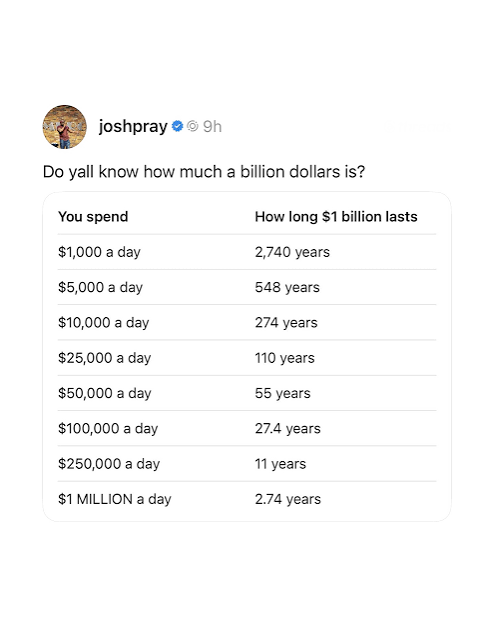
For context, that’s approximately the size of Hungary’s entire annual economic output, and considerably more than Ireland spends running all its government departments in a year. Now, before an economist throws a chair at me, GMV is not GDP. One measures the value of transactions, the other the value added to an economy. They’re not interchangeable. It is also about the same as building 6 Childrens Hospitals in every county in Ireland now.
But the comparison gives you some appreciation of the extraordinary scale involved. And yet, strangely, the $264 billion isn’t the most interesting number.
Not even close.
Because underneath the promotional noise, China may be showing us something much more consequential.
E-commerce is slowly becoming less about buying things and more about getting things done.
And I suspect the Western retail industry hasn’t fully appreciated what that means.
From cardboard boxes to completed tasks
For the better part of 30 years, we’ve built e-commerce around a fairly simple proposition. Find a product. Put it in a basket. Pay for it. Wait for somebody to arrive at your door carrying a cardboard box. We’ve spent billions optimising this sequence.
Better search. Better recommendations. Better checkout. Faster delivery. More payment options. More warehouses. More software to manage the software that manages the warehouses. And don’t get me started on the number of platforms promising to deliver a single customer view. Somewhere out there is a customer who’s been viewed so many times they’re probably entitled to royalties.But the underlying transaction hasn’t fundamentally changed. Remember Amazon 1997?
We’re still mostly selling things. Look at what happened at JD.com during this year’s Singles’ Day. The company reported more than 300 million service orders.
Not 300 million parcels.
Service orders.
Home cleaning. Maintenance. Automotive services. Health consultations. The sorts of things that traditionally sat outside the conventional e-commerce transaction. JD reported that transaction value for multi-visit home-cleaning packages increased more than 550% year on year, while automotive maintenance service orders rose 167%. These are selected growth figures, not proof that services have overtaken merchandise. They haven’t. But they point towards an important change in how consumers use commerce platforms.
Imagine buying a washing machine.

Traditionally, the retailer sells you the machine, perhaps offers installation, and considers the transaction complete.
But what if the platform also manages installation, maintenance, repairs, consumables and eventual replacement?
The customer isn’t really buying a washing machine.
They’re buying clean clothes.
That distinction is enormous.
One is a product transaction. The other is an ongoing relationship built around an outcome.
And relationships have rather different economics from transactions.
The great services opportunity
This is where I think Western e-commerce has an enormous amount of unfinished business. We’ve spent decades trying to increase customer lifetime value by encouraging people to buy more products. More emails. More recommendations. More loyalty points. Buy this because you bought that. But what if the next generation of customer lifetime value comes from solving problems that don’t necessarily require another physical product?
Think about the home.
You buy a lawnmower. You need servicing.
You buy a sofa. You might need cleaning.
You buy a television. You need installation.
You buy a bicycle. You need repairs.
You buy a house. You need approximately 400 different services, most of which you’ll discover when something starts leaking.
There are businesses addressing individual pieces of this already. TaskRabbit, Angi and plenty of local specialists.
But the integration between merchandise, services, fulfilment and customer relationships remains remarkably fragmented.
The opportunity isn’t simply to bolt a handyman marketplace onto a retailer’s website.
It’s to understand the customer’s underlying need and orchestrate everything required to meet it. Of course, services are messy. You can’t warehouse a plumber. Quality varies. Scheduling is difficult. Liability matters.And anyone who has waited three weeks for an electrician will appreciate that adding an app doesn’t magically create more electricians.But that’s precisely why the opportunity is interesting. The winners won’t necessarily be the businesses with the biggest catalogues. They will trade on trust. Like Huang.
Healthcare is entering the commerce conversation
Another interesting signal came from JD Health. During Singles’ Day, consultations through its AI doctor service increased by more than 500% year on year. Now, that doesn’t mean AI has suddenly become a substitute for doctors. Nor should it. But it does demonstrate growing consumer willingness to access health-related services through a familiar digital commerce environment.
Consider the distinction.
Traditionally, you might purchase vitamins, a blood-pressure monitor or a fitness tracker online. The commercial relationship ends when the product arrives.But increasingly, the proposition can extend into consultation, monitoring, pharmacy services, follow-up care and preventative health.
The product becomes the doorway to a service.
And the service potentially becomes a continuing relationship. For countries such as Ireland and the UK, where healthcare capacity and waiting times are persistent challenges, this raises fascinating questions. Not least around regulation, clinical accountability, privacy and whether digital convenience actually improves health outcomes. I don’t think the answer is to turn Amazon into your GP.
Quite the opposite.
But I do think we’re going to see an increasingly blurred boundary between retail, wellness, healthcare access and subscription services.The interesting companies will be those that understand where commerce ends and clinical responsibility begins.
AI is changing the job description of shopping
Then there’s AI. JD reported selling more than 50 million AI-related products during the campaign. It also reported substantial growth in purchases of AI computing tokens, while conversational shopping assistants became more prominent across Chinese platforms. For years, we’ve been told that AI will revolutionise e-commerce.Usually by someone trying to sell us an AI-powered product recommendation engine. But I think we’re looking at the wrong part of the transaction.
The most significant change isn’t that AI can recommend a better pair of shoes.
It’s that AI may eventually remove the need for the customer to go shopping in the first place. Think about the traditional customer journey.
We know the new path, I ‘ll spare you.
Now imagine a customer saying:
“I need a new washing machine. Something reliable, energy-efficient, suitable for a family of five. Arrange delivery, installation and removal of the old one. Keep the total under €800.”
The AI agent researches the options, checks compatibility, compares total costs, evaluates service providers and presents a recommendation.
Eventually, with appropriate permissions, it might complete the transaction.Suddenly, the retailer’s beautiful homepage becomes a little less important. We hate to think this. We hate this loss of relevance, me inclusded.
The customer may never see it. The carefully crafted product listing may be read primarily by software.And the €50,000 campaign designed to capture a particular search term may be competing for attention from an algorithm that has no emotional attachment to your brand guidelines.That’s a fairly substantial change.
It also raises a question that I think every e-commerce leader should be asking.
What happens to customer acquisition when the customer is represented by an agent?
Who owns discovery?
Who controls the recommendation?
How do brands establish trust with machines making decisions on behalf of people?
And how do we ensure that the agent is genuinely working for the consumer rather than simply favouring whoever pays the platform the most?
These aren’t hypothetical questions about some distant future.
The commercial architecture is already being assembled.
Although we should be careful: high usage of AI shopping tools doesn’t yet prove that autonomous agents are generating meaningful incremental sales. That remains to be demonstrated.
The curious return of the specialist
One of my favourite figures from Singles’ Day has nothing to do with the biggest platforms.Alibaba reported that 333 brands less than three years old ranked first in specialised Tmall categories during part of the promotional period.
Think about that.
In an environment dominated by enormous platforms, established manufacturers and extraordinary promotional budgets, hundreds of relatively young brands were leading their particular niches.Not necessarily the entire market. Their niches. For years, scale has been the defining ambition of e-commerce. More products. More markets. More customers. More categories.But there’s another way to compete.
Know a particular customer better than anybody else.
Solve a specific problem exceptionally well. Build a product or experience that doesn’t need to appeal to everyone.The internet was supposed to make niche businesses viable at scale. Somewhere along the way, we became so obsessed with marketplaces and acquisition costs that we occasionally forgot that.AI could make this even more interesting.If a shopping agent can identify a specialist product that genuinely matches a customer’s requirements, a smaller brand might compete on relevance rather than simply on advertising expenditure.That’s the optimistic version.The less optimistic version is that the agents become another paid gatekeeper, and we simply replace search advertising with recommendation advertising.
The ageing consumer isn’t going anywhere
Another trend worth watching is the growth of experience-led spending among older consumers. Travel platform Fliggy reported a 25% increase in bookings from travellers aged 50 and above during the campaign . For an industry obsessed with Gen Z, influencers and whatever social platform has emerged since breakfast, we sometimes overlook the purchasing power of older consumers. Many are interested in travel, wellbeing, convenience and experiences rather than accumulating more possessions. Obviously, older consumers aren’t one homogeneous group. Wealth, health and spending power vary enormously. But the opportunity to serve different life stages is substantial. And unlike another pair of trainers, an experience can create a much deeper relationship between customer and provider. Travel, hospitality, leisure, education, health and personal services may become increasingly important components of what we consider the commerce economy.
Which brings us back to the original point.
Perhaps e-commerce’s next great expansion isn’t another category of products. Perhaps it’s the integration of categories that historically sat outside e-commerce altogether.
So what does this mean for the next five years?
I don’t believe we’re about to stop buying physical goods. Nor do I think Western retailers should blindly copy China. The market structures are different. Labour costs are different. Regulation is different. Consumer behaviour is different.nAnd China’s experience comes with its own warning signs. Singles’ Day sales growth slowed to an estimated 4.8% in 2026, compared with 14.2% the previous year, according to Syntun’s figures as reported by Reuters. The festival is also stretching across weeks rather than days, diluting the urgency that once made it such an extraordinary retail event.
So this isn’t a story of endless Chinese growth.
It’s a story about how platforms respond when conventional merchandise growth becomes harder to achieve.
And I think there are five developments worth watching between now and 2031.
1. Retailers will increasingly sell outcomes rather than products.
Installation, repair, maintenance and replenishment will become more integrated into commerce propositions.
2. Services will become a more important source of recurring customer relationships.
Not necessarily higher-margin relationships. That depends on labour costs, fulfilment, service quality and who actually performs the work. But potentially more frequent and valuable ones.
3. AI will begin to reshape customer acquisition.
The battle for visibility will increasingly include machine-readable product information, trust signals, availability, transparent pricing and compatibility with shopping agents.
4. Specialist brands will have new opportunities to compete on relevance.
Provided discovery systems genuinely reward suitability rather than simply replicating today’s advertising auctions.
5. Commerce platforms will increasingly compete to coordinate entire experiences.
Not just the product, but the people, services, information and fulfilment required to deliver the outcome.
None of this is guaranteed.
And it certainly won’t happen at the same speed everywhere.
But the direction is interesting.
The next frontier might be the absence of shopping
Here’s the thought I keep coming back to.
For decades, the ambition of e-commerce has been to make shopping easier.
Fewer clicks. Faster checkout. Better delivery.
What if the next ambition is to make shopping unnecessary?
Not consumption.
Shopping.
The act of searching, comparing, coordinating, booking, paying and following up.
What if much of that becomes an invisible service running in the background of everyday life?
You don’t buy a filter for your water system.
The replacement arrives when it’s needed.
You don’t search for somebody to repair the dishwasher.
The service is arranged when the machine reports a problem.
You don’t spend three evenings comparing travel packages.
You explain what kind of holiday you want and receive a carefully considered itinerary.
Of course, sometimes we actually enjoy shopping. Discovery, browsing and the occasional completely irrational purchase are part of being human.
I wouldn’t want an AI agent preventing me from buying something ridiculous just because it doesn’t meet my stated objectives.
Where’s the fun in that?
But much of what we call shopping is really administrative work disguised as consumer choice.
And that, I suspect, is where some of the greatest opportunities lie.
Singles’ Day started as a celebration of being single.
It became a celebration of buying things.
Now, nearly two decades after Alibaba transformed it into a shopping phenomenon, it may be offering us an early glimpse of something else entirely.
A world where the most successful commerce businesses aren’t necessarily those that sell the most products.
They’re the ones that solve the most problems.
$264 billion is an extraordinary number.
But the next chapter of e-commerce might be defined by something much harder to measure.
How much of our lives can commerce give back to us?
And perhaps that’s a more interesting question than how many parcels we can deliver in a day.